
O que você está procurando?

Floating solar is gaining attention as a way to generate renewable energy without using valuable land. By placing solar panels on water surfaces, developers can make better use of existing water areas. However, not every water body is suitable for this type of project. Factors such as water depth, surface conditions, water quality, and environmental regulations all need to be considered.
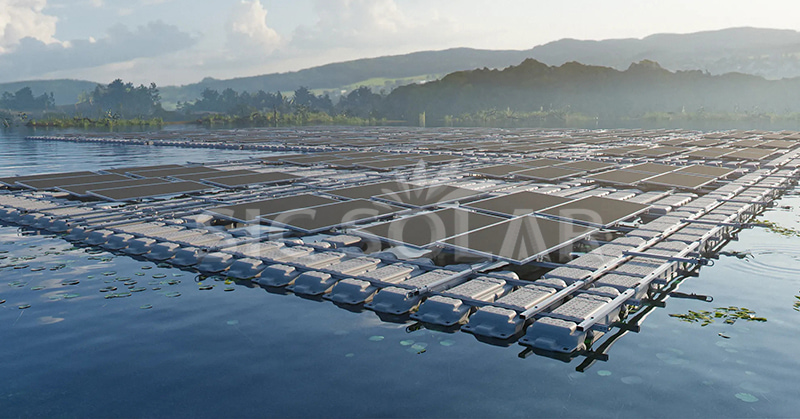
Reservoirs are among the most promising locations for floating solar projects. Many have large water surfaces and relatively stable conditions, while some are already connected to nearby power infrastructure. Floating solar panels may also help reduce evaporation in the areas they cover.
Factories and industrial facilities often have artificial ponds or wastewater treatment basins with unused surface areas. These sites may be suitable for floating solar installations, but water quality and possible chemical exposure need careful assessment. The system must also allow normal industrial and water treatment operations to continue.
Large artificial lakes can provide plenty of space for floating solar arrays. Before installation, however, developers need to consider wave activity, wind exposure, seasonal water level changes, and local environmental restrictions. These factors can affect both the floating structure and its anchoring system.
Irrigation ponds and agricultural reservoirs offer another opportunity to combine water management with solar power generation. Floating panels may help limit evaporation, but the layout should not interfere with irrigation access, water intake points, or routine maintenance.
A proper site assessment is essential before choosing a floating solar mounting system. Key factors include water depth, wind speed, wave conditions, changes in water level, and the requirements of the anchoring and mooring systems. The floating structure must be able to remain stable under the site's expected environmental conditions.
Material selection is just as important. Components need to withstand long-term exposure to moisture and the specific water environment. SIC Solar manufactures and supplies photovoltaic mounting systems for different project applications. For floating solar projects, corrosion resistance, reliable connections, and structural stability should all be considered during system selection.
Q1: Can floating solar systems be installed on any lake?
A: No. Water conditions, environmental regulations, anchoring options, and site accessibility must be assessed before installation.
Q2: What water depth is required for a floating solar system?
A: There is no fixed minimum depth for every project. The required depth depends on the floating design, anchoring method, and site conditions.
Q3: What information is needed for a quotation?
A: Please provide the water body's dimensions, water depth, water level variations, panel specifications, and local wind and wave conditions.
Q4: Can floating solar structures withstand strong winds?
A: They can be designed to handle site-specific wind conditions with a suitable floating structure and properly engineered anchoring and mooring systems.
Q5: Does SIC Solar supply floating solar mounting solutions?
A: SIC Solar manufactures and supplies photovoltaic mounting products for different project requirements. Contact the team with your site details and structural specifications to discuss a suitable solution.



 IPv6 Rede suportada
 português
 English
 Deutsch
 español
 Nederlands
 العربية
 日本語
 한국의
 Melayu
 Tiếng việt