
O que você está procurando?

Coberturas solares para automóveisestão se tornando uma solução cada vez mais popular para edifícios comerciais, comunidades residenciais, centros comerciais e áreas de estacionamento públicas. Ao combinar proteção veicular com geração de energia renovável, elas maximizam o uso dos espaços de estacionamento existentes. Como essas estruturas são instaladas ao ar livre e expostas aos elementos durante todo o ano, muitos proprietários de projetos perguntam se as coberturas solares para automóveis podem suportar condições climáticas extremas. A resposta é sim — quando são projetadas profissionalmente e construídas com sistemas de montagem de alta qualidade.
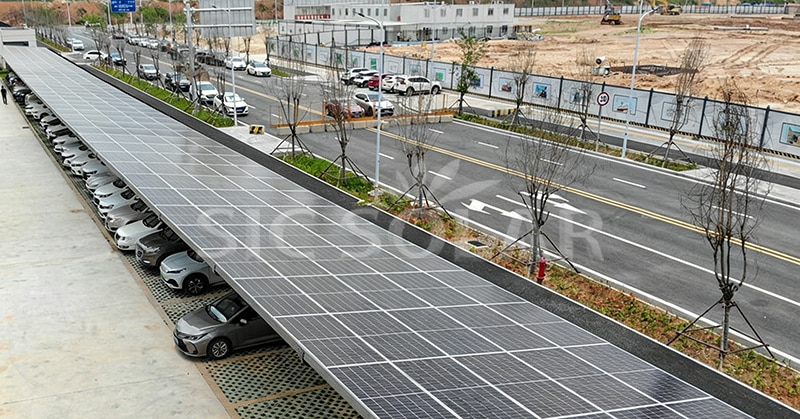
Um dos maiores desafios para coberturas solares para automóveis é o vento forte. Grandes painéis solares podem gerar elevação significativa devido ao vento, especialmente em estacionamentos abertos. Para resolver isso, os engenheiros realizam cálculos detalhados de carga de vento com base nos códigos de construção locais, velocidade do vento, terreno e altura da estrutura. O tamanho das colunas, vigas e fundações é então otimizado para garantir que a cobertura permaneça estável durante tempestades ou tufões.
A carga de neve é outra consideração importante em climas mais frios. Neve pesada aumenta o peso sobre os painéis solares e a estrutura de suporte. As coberturas solares para automóveis são projetadas com capacidade de carga suficiente para suportar com segurança essas cargas adicionais. Ângulos de inclinação do telhado apropriados também ajudam a neve a deslizar naturalmente, reduzindo o acúmulo e permitindo que os painéis continuem gerando eletricidade de forma mais eficiente.
Chuvas intensas exigem um projeto de drenagem eficaz. Coberturas solares modernas geralmente incluem calhas e condutores integrados que coletam a água da chuva e a direcionam para longe da área de estacionamento. Uma drenagem adequada não apenas protege veículos e pedestres, mas também evita o acúmulo de água ao redor das fundações estruturais, reduzindo o risco de erosão e danos a longo prazo.
A seleção de materiais desempenha um papel fundamental na resistência às condições climáticas. A maioria das estruturas de coberturas solares de alta qualidade é fabricada em aço galvanizado a quente ou alumínio anodizado, combinados com fixadores de aço inoxidável. Esses materiais resistentes à corrosão oferecem excelente durabilidade em ambientes úmidos, costeiros e de alta pluviosidade, exigindo manutenção mínima.
A fundação é igualmente importante para a estabilidade estrutural. Dependendo das condições do solo e dos requisitos do projeto, as coberturas solares para automóveis podem usar fundações de concreto, parafusos de solo ou estacas cravadas. Uma fundação devidamente projetada mantém a estrutura segura contra elevação pelo vento, movimentos do solo e variações climáticas sazonais.
Fabricantes comoSIC Solar, uma empresa especializada na produção e fornecimento de sistemas de montagem fotovoltaicos, oferecem soluções de montagem para coberturas solares projetadas para ambientes externos exigentes. Seus sistemas são projetados para oferecer alta resistência estrutural, resistência à corrosão e instalação eficiente, atendendo aos requisitos de projetos solares comerciais e industriais.
A manutenção de rotina melhora ainda mais o desempenho a longo prazo. Inspeções regulares de parafusos, vigas, sistemas de drenagem e colunas de suporte ajudam a identificar conexões soltas ou sinais de corrosão antes que se tornem problemas significativos. Limpar as calhas e verificar os caminhos de drenagem também ajuda a manter a integridade estrutural da cobertura durante períodos de chuvas intensas.
Uma cobertura solar bem projetada é construída para funcionar de forma confiável sob uma ampla gama de condições climáticas. Ao combinar cálculos de engenharia precisos, materiais duráveis, design adequado da fundação e instalação profissional, essas estruturas podem continuar a fornecer proteção veicular e geração de energia limpa, mesmo em regiões afetadas por ventos fortes, neve pesada, chuvas intensas e temperaturas extremas.



 IPv6 Rede suportada
 português
  English
 Deutsch
 español
 Nederlands
 العربية
 日本語
日本語 한국의
한국의 Melayu
 Tiếng việt